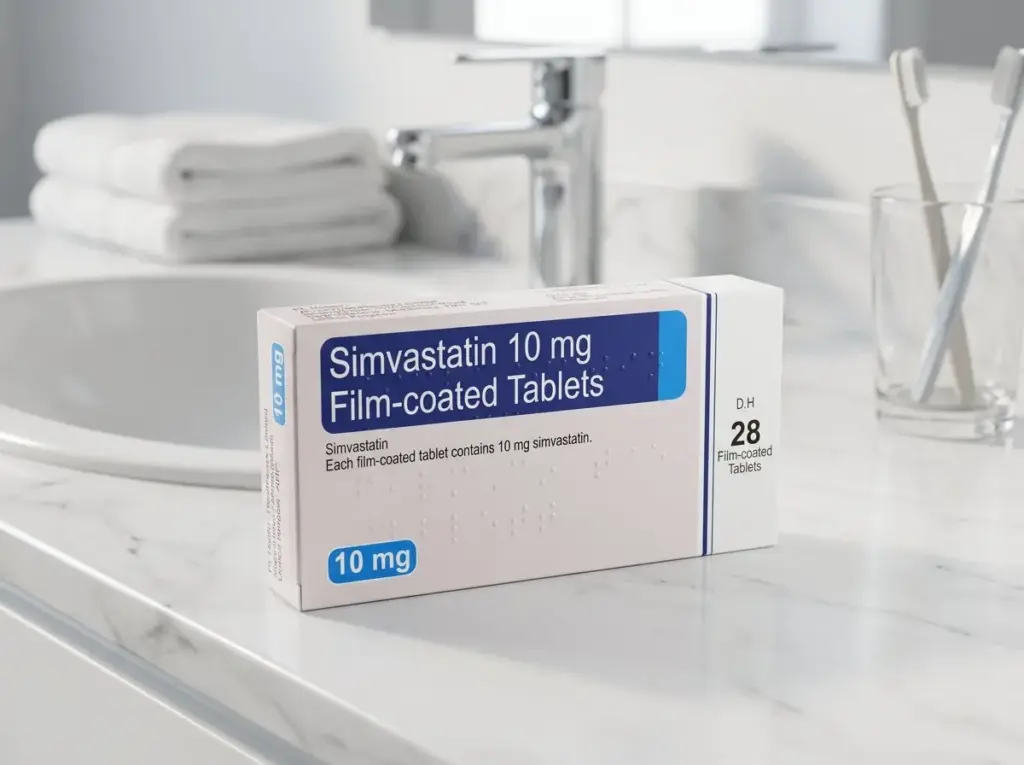
Simvastatin and muscle pain: the gene that changes your risk
Simvastatin has been one of the most prescribed drugs in the UK for decades. It also has a reputation, and the reputation is mostly about muscles.
By Dr Mark Hudson-Peacock
09/08/2026
6 min read
Simvastatin lowers cholesterol and, in people at raised cardiovascular risk, reduces the chance of heart attack and stroke. For most people it is well tolerated. For some, it brings aching, weak or tender muscles that make daily life harder and lead many to stop taking it altogether.
Why statins cause muscle pain in some people
To work, simvastatin has to travel from the blood into the liver. A transporter protein made by the SLCO1B1 gene carries it there. If that transporter works less well, more of the medicine stays in the bloodstream and reaches the muscles, which raises the chance of side effects.
In plain English
Your genes can decide how much simvastatin stays in your blood. More in the blood can mean more muscle pain.
What the SLCO1B1 result means
Normal function: simvastatin is usually suitable at standard doses
Reduced function: a higher risk of muscle problems, especially at higher doses
Poor function: guidance usually favours a different statin or a lower dose
“I asked my GP if I could try another brand and, amazingly, the pains in my thighs every night stopped.”
ASC, Kent · Mantara customer
Should you stop your statin?
Please don’t stop your medicine
Never stop or change a statin without talking to your doctor. A PGx result helps your GP choose the statin and dose that suit you.
How to find out
The Mantara PGx Panel Test includes SLCO1B1 and covers simvastatin, atorvastatin and 76 other medicines. It uses a saliva sample taken at home, and your report is ready in 4–6 weeks.