
Is PGx Testing Cost-Effective for the NHS? What New UK Modelling Shows

The clinical case for pharmacogenomic (PGx) testing has been building for years. The question that decides whether it reaches NHS patients at scale is a different one: does it represent value for money?
New UK economic modelling, presented at the International Society for Pharmacoeconomics and Outcomes Research (ISPOR) conference in Philadelphia in May 2026, sets out an early answer. The study evaluated the cost-effectiveness of offering the Mantara® PGx DNA Test alongside the NHS over-40s Health Check, compared with usual care. It was commissioned and funded by the National Institute for Health and Care Research (NIHR) i4i FAST programme and led by health economists at QC Medica, with academic input from the University of Liverpool and the Center for the Evaluation of Value and Risk in Health at Tufts Medical Center.
Below is a summary of what the model did, what it found, and, just as importantly, what it does not yet tell us.
Key findings at a glance
In the base case, PGx testing offered alongside the NHS Health Check was estimated to be cost-effective at £9,654 per quality-adjusted life year (QALY), below the £20,000 per QALY threshold commonly applied in England.
That estimate covers five of the twelve genes in the Mantara® PGx DNA Test, and only those indications with suitable published UK cost-effectiveness evidence.
The wider clinical rationale rests on the PREPARE study, which estimated that PGx-guided prescribing could contribute to a 30% reduction in clinically relevant adverse drug reactions.
Scenario analyses produced variable results, reflecting genuine uncertainty in the underlying evidence base.
The authors are clear that more UK evidence is needed to assess the full panel, the full range of treatments, and real-world implementation.
Why the cost-effectiveness of PGx matters now
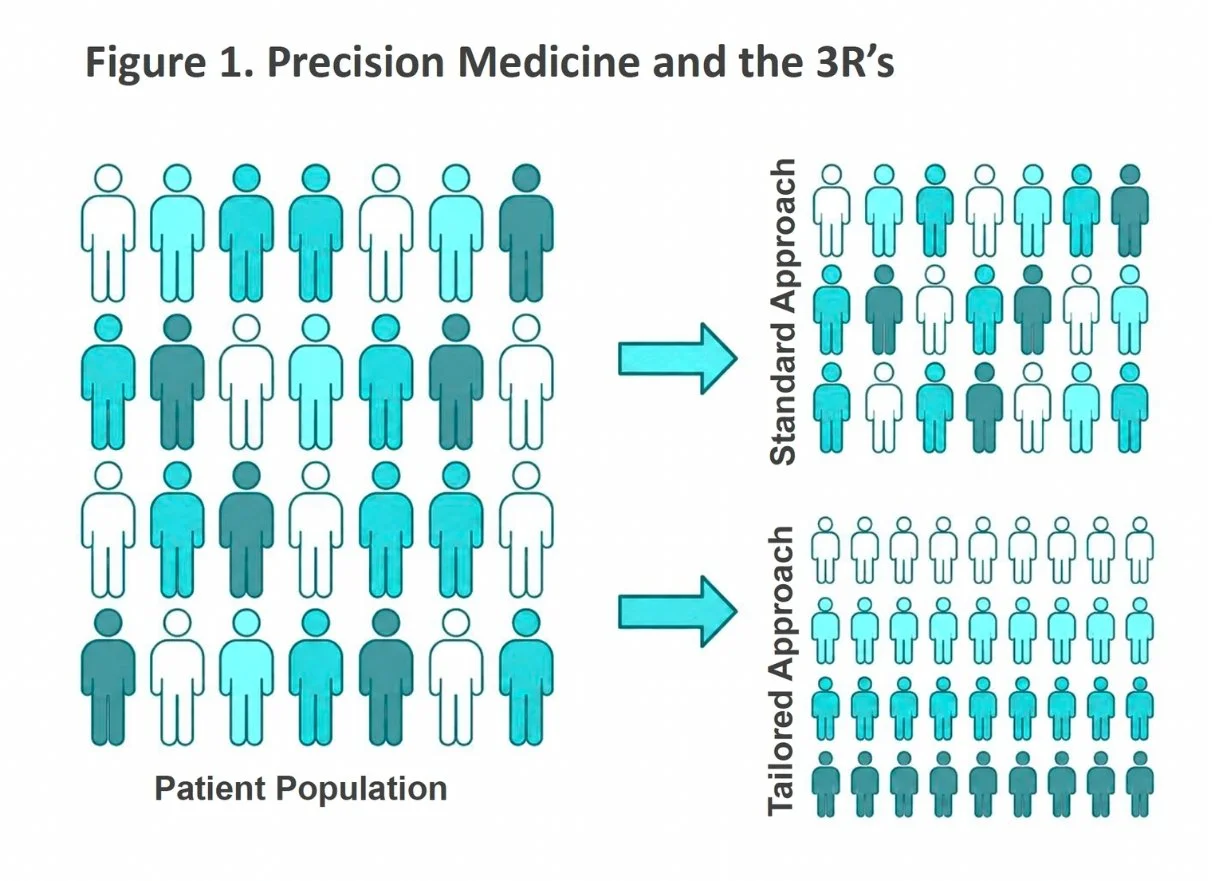
Prescribing today still involves a degree of trial and error. A medicine is chosen on the basis of what works for most people, and if it proves ineffective or poorly tolerated, the prescriber tries something else. For many patients that process is simply slow. For some it carries real risk.
PGx testing is intended to narrow that gap by giving clinicians information about how an individual is likely to metabolise particular medicines before the first prescription is written. The PREPARE study, published in the Lancet in 2023, tested a twelve-gene pharmacogenetic panel across seven European countries and estimated that PGx-guided prescribing would contribute to a 30% reduction in clinically relevant adverse drug reactions.
The policy context has moved as well. The UK Government's Fit for the Future: 10 Year Health Plan for England sets out plans to integrate PGx testing into the NHS over-40s Health Check. That is a significant commitment, and it raises an immediate question for commissioners: what would it cost, and what would the NHS get for it?
Cost-utility modelling is how that question gets answered in practice. It is the analysis NICE and NHS commissioners look for, and until now there has been very little of it covering PGx panel testing in a UK setting.
What the study set out to do
The objective was deliberately modest in scope: to produce an early model providing initial estimates of the cost-effectiveness of PGx testing as part of the NHS over-40s Health Check.
This is not a definitive verdict on panel testing. It is a first structured attempt to put UK numbers to the question, built from the evidence that currently exists, and it should be read that way.
How the model worked
The literature review
The team ran a targeted literature review to identify UK-based cost-effectiveness evidence for pharmacogenetic testing relevant to the genes and drug-gene pairs included in the PGx Test. Studies were included only where they reported both costs and quality-adjusted life years, which is what a cost-utility model requires.
The cost-utility model
A cost-utility model was then developed to estimate the value for money of offering the PGx Test alongside the NHS Health Check, compared with usual care.
The model incorporated:
test costs
disease incidence
prescribing patterns
allele frequencies
adverse drug reaction costs
quality-of-life impacts
costs and outcomes associated with alternative treatment pathways
Base case assumptions
Three assumptions shape the base case and are worth stating plainly:
The PGx Test was assumed to be offered as an additional component of the NHS Health Check for adults aged 40 to 74.
NHS Health Check costs were excluded from the incremental analysis, because they apply equally to both the intervention and the comparator.
The model assumed that all patients diagnosed with a relevant condition would be offered pharmacotherapy, and that actionable PGx results would inform prescribing decisions.
That third assumption matters, and the authors return to it in their limitations. The model describes a world in which actionable results are acted on.
What the existing evidence base looks like
One of the more striking findings sits in the literature review rather than the results.
Only four published studies reported cost-effectiveness evidence for pharmacogenetic testing in a UK context, covering three treatments across four of the twelve genes in the Mantara® PGx DNA Test: CYP2D6, CYP2C9, TPMT and VKORC1. NICE guidance on CYP2C19 testing in people offered clopidogrel following ischaemic stroke or transient ischaemic attack, published in 2024, was also included.
That is the entire UK health-economic evidence base for this field. It is a small foundation, and it constrains what any model built on it can say.
The results

The base case includes cost-effectiveness estimates for PGx testing across five of the twelve genes in the panel, paired with specific clinical indications:
CYP2D6 in women with breast cancer
TPMT in people with autoimmune disease
CYP2C9 and VKORC1 in people with atrial fibrillation
CYP2C19 in people following ischaemic stroke or transient ischaemic attack
Below the £20,000 per QALY threshold, the modelled test was found to be cost-effective at £9,654 per QALY.
The model results reported in the study are:
Total costs: £95,137
Total QALYs: 9.85
ICER (cost per QALY): £9,654
An ICER, or incremental cost-effectiveness ratio, expresses the additional cost of achieving one additional unit of health benefit compared with the alternative. A QALY, or quality-adjusted life year, is a measure combining length of life with quality of life. In England, interventions below roughly £20,000 to £30,000 per QALY are generally considered to represent good value.
The important caveat, stated by the authors themselves, is that these results represent a version of the Mantara® PGx DNA Test consisting only of the genes and indications included in the model, and assume that the resulting recommendations were acted upon.
Scenario analyses
Alongside the base case, the team explored alternative implementation settings and sources of uncertainty. The scenarios included:
CYP2C19 testing for people with depression treated with selective serotonin reuptake inhibitors
testing in people newly prescribed atorvastatin
single-gene testing for statin prescribing
alternative evidence sources for warfarin-related pharmacogenetic testing
These scenarios generated variable ICER estimates. That variation reflects both the uncertainty in the underlying evidence and the differing contribution of individual gene-drug pairs. Some pairs carry the economic case more strongly than others, which is useful information in itself when thinking about where PGx testing is likely to deliver most value first.
What the model does not tell us
The authors set out four limitations, and they deserve to be read alongside the headline figure rather than after it.
The model captures only part of the panel. It was limited to genes and indications with suitable UK cost-effectiveness evidence, so it does not capture the full value of the PGx test. Seven of the twelve genes contribute nothing to the base case, not because they lack clinical relevance but because the UK health-economic evidence for them does not yet exist.
Inputs were drawn from varied sources. Multiple studies, datasets and assumptions were combined, and these may vary in population, setting and relevance to current NHS pathways.
Real-world behaviour may differ. The model assumed all actionable PGx recommendations were followed. Real-world uptake and prescribing behaviour may not match that, and where they do not, the economic case weakens accordingly.
ADR costs were generalised. Adverse drug reaction costs and QALY impacts were based on general estimates rather than drug-specific or gene-specific values.
Taken together, these limitations point in both directions. The model may understate the value of the full panel, and it may overstate what is achievable in routine practice. Both are true at once, which is why the authors describe this as an early model producing initial estimates.
What this means for clinicians
For prescribers, the practical takeaway is that the economic argument for PGx testing is beginning to be evidenced in a UK setting rather than assumed, at least for specific gene-drug pairs with established clinical guidance behind them.
PGx results are an input to a clinical decision, not a substitute for one. A genotype result describes how a patient is likely to metabolise a given medicine. What follows from that, whether a different agent, an adjusted dose or no change at all, is a judgement that sits with the prescribing clinician alongside everything else they know about the patient.
Nothing in this modelling suggests that any patient should start, stop or alter a medication. Patients taking any medicine discussed here should continue to take it as prescribed and raise any questions with their clinician or pharmacist.
Where PGx testing appears to add most value on current evidence is in prescribing decisions where the consequences of reduced or altered metabolism are well characterised and clinically significant. The CYP2C19 and clopidogrel pathway following ischaemic stroke or TIA, now covered by NICE guidance, is the clearest example.
What this means for NHS commissioners
The signal is early but positive. Offering PGx testing alongside the NHS Health Check was estimated to fall well below the £20,000 per QALY threshold in the base case, which is the kind of result that warrants further evaluation rather than a decision either way.
The evidence gap is the more actionable finding. Four published UK cost-effectiveness studies across three treatments is a thin base on which to plan a national programme. Further evidence is needed to evaluate the full panel and its potential value across additional prescribing indications, and that is where the authors direct attention next.
Frequently asked questions
What is an ICER?
An incremental cost-effectiveness ratio expresses the additional cost of achieving one additional unit of health benefit, compared with the alternative course of action. It is usually reported as a cost per QALY.
What is a QALY?
A quality-adjusted life year combines length of life and quality of life into a single measure. One QALY represents one year lived in full health.
Is PGx testing cost-effective in the UK?
In this early model, PGx testing offered alongside the NHS over-40s Health Check was estimated to be cost-effective at £9,654 per QALY, below the £20,000 per QALY threshold. That estimate applies to the five genes and specific indications included in the model, and assumes actionable results inform prescribing. More UK evidence is needed to assess the full panel.
Which genes were included in the model?
Five of the twelve genes in the Mantara® PGx DNA Test: CYP2C19, CYP2C9, CYP2D6, TPMT and VKORC1, each paired with a specific clinical indication supported by published UK evidence.
Is PGx testing part of the NHS Health Check yet?
Not currently. The UK Government's Fit for the Future: 10 Year Health Plan for England sets out plans to integrate PGx testing into the NHS over-40s Health Check. This modelling was undertaken to provide early estimates of what that would mean in cost-effectiveness terms.
Sources
Pirmohamed M. Common drugs 'do not work properly' in up to 70% of cases. The Telegraph. 2022.
Swen JJ, et al. 12-gene pharmacogenetic panel to prevent adverse drug reactions. Lancet. 2023;401:347-56.
UK Government. Fit for the Future: 10 Year Health Plan for England.
Woods B, et al. Value of information analysis of CYP2D6 testing in breast cancer. Value Health. 2011;14:989-1001.
Verhoef TI, et al. Cost-effectiveness of pharmacogenetic-guided warfarin dosing. Pharmacogenomics J. 2016;16:478-84.
Thompson AJ, et al. Cost-effectiveness of TPMT genotyping for azathioprine. Value Health. 2014;17:22-33.
Pink J, et al. Pharmacogenetics-guided warfarin therapy vs alternative anticoagulation. Clin Pharmacol Ther. 2014;95:199-207.
NICE. CYP2C19 genotype testing to guide clopidogrel use after stroke/TIA. 2024.
About this research
Evaluating the cost-effectiveness of pharmacogenetic testing via the Mantara® PGx DNA Test: insights from NHS health check integration and UK-based economic modelling.
Antony P. Martin, Nick Ainsworth, Rachel Houten, Steven Fletcher, Mark J Hudson-Peacock. QC Medica LLP; Faculty of Health and Life Sciences, University of Liverpool; Center for the Evaluation of Value and Risk in Health, Tufts Medical Center; Mantara Health Ltd.
Presented at the International Society for Pharmacoeconomics and Outcomes Research (ISPOR), Philadelphia, 17 to 20 May 2026.
This work was commissioned and funded by the National Institute for Health Research (NIHR) i4i FAST programme. The views expressed in the publication are those of the authors and not necessarily those of the NIHR or its stakeholders.