
SERTRALINE NOT WORKING, OR SIDE EFFECTS TOO STRONG? YOUR GENETICS MAY EXPLAIN IT
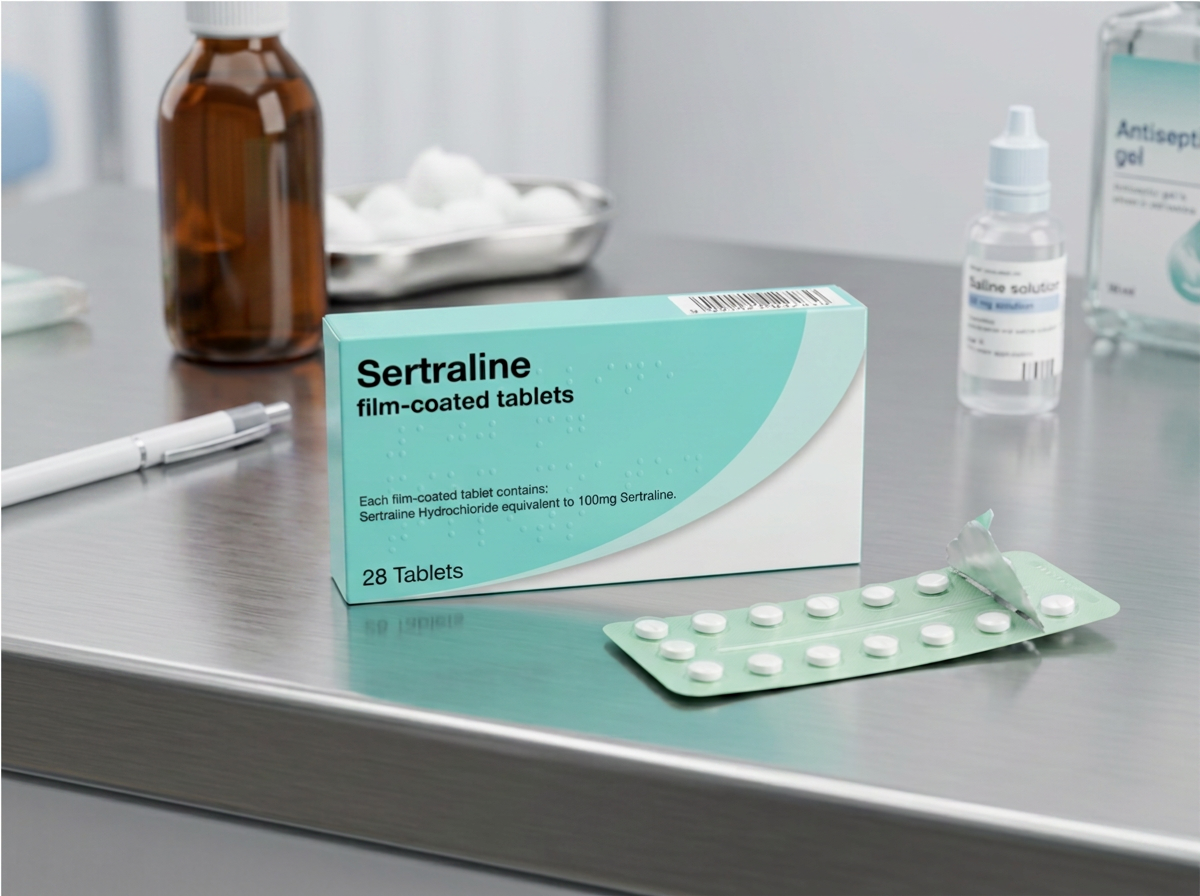
Sertraline is the most commonly prescribed antidepressant in the UK. It's used for depression, anxiety, panic disorder, OCD and PTSD, and NICE lists it among the first-line SSRI options.
For a lot of people it does exactly what it's meant to do.
For others the picture is messier. Some feel nothing much after two months at a standard dose. Some feel too much straight away, with nausea, agitation or broken sleep bad enough that they stop before they ever reach a therapeutic level.
Both groups are often told the same thing: give it more time, or try a different one. That advice isn't wrong. But it skips over a measurable reason these experiences differ, which is that people clear sertraline from the body at very different rates.
What Happens to Sertraline After You Take It
Sertraline is broken down in the liver, mostly by an enzyme called CYP2C19, with a meaningful contribution from a second enzyme, CYP2B6.
The genes coding for both enzymes vary a lot between individuals. Depending on which version you've inherited, the enzyme can be fast, normal, sluggish, or barely functional.
That changes how much sertraline is circulating in your blood on any given dose.
If you clear it quickly, a standard dose may never build to a level that does anything useful. If you clear it slowly, the same dose can produce the blood levels of a much higher one, and side effects follow.
This is not the whole story of why antidepressants work or don't. Depression and anxiety are not simply pharmacokinetic problems. But it is one concrete, testable variable in a process that otherwise runs on estimation.
Why the Six-Week Wait Is Such a Problem
Standard practice is to give an SSRI four to six weeks at an adequate dose before judging it. If it hasn't worked, you increase the dose or switch, then wait again.
Done twice, that's three or four months. Done three times, it's most of a year.
For someone who is unwell, that is a long time to spend on a sequence of educated guesses. It's also the point at which many people quietly stop taking anything at all.
Knowing in advance that someone is a fast or slow metaboliser doesn't remove the wait. It does mean the first attempt is better aimed.
Side Effects, and Why Some People Get More of Them
The common ones are nausea, diarrhoea, headache, dry mouth, insomnia, sweating, sexual difficulties, and an increase in anxiety or restlessness during the first week or two.
Most are dose-related, and most settle. Less common but recognised effects include low sodium levels, which is more of a concern in older adults.
If you're consistently getting stronger side effects than people around you on the same dose, reduced metabolic clearance is one plausible explanation, and it's one that can be checked rather than guessed at.
None of this is a reason to change how you take sertraline on your own. Stopping abruptly can cause withdrawal symptoms, and any change to dose or drug should be planned with the person who prescribed it.
What the Guidelines Say
For clinicians, the position on sertraline is unusually well defined.
CPIC's 2023 guideline covers CYP2D6, CYP2C19, CYP2B6, SLC6A4 and HTR2A genotypes in serotonin reuptake inhibitor prescribing, and it makes specific recommendations for sertraline.
For CYP2C19 poor metabolisers, CPIC advises considering a 50% reduction in starting dose, or an alternative not primarily metabolised by CYP2C19.
For CYP2C19 ultrarapid and rapid metabolisers, an alternative antidepressant is suggested, given the risk of inadequate response.
CYP2B6 poor metabolisers show higher exposure, and a lower starting dose, slower titration and a 25% reduction in maintenance dose can be considered. CPIC classes this recommendation as optional, as it rests on pharmacokinetic rather than outcome data.
Combined CYP2C19 and CYP2B6 results can indicate adjustment where either result alone would not.
Worth noting alongside that: CPIC reviewed SLC6A4 and HTR2A, the serotonin transporter and receptor genes often included in commercial "depression panels", and concluded the evidence does not support using them to guide prescribing. Metabolism genes are where the actionable information currently sits.
What a PGx Test Can and Can't Tell You
It can tell you how your body is likely to process sertraline, whether a standard dose is likely to under- or over-shoot, and which alternatives depend on the same enzyme pathway.
It can't tell you whether you'll feel better. No genetic test predicts response to treatment for depression or anxiety, and anyone claiming otherwise is overselling.
What it does is narrow the field before you start, rather than after three failed attempts. The result is also permanent, so it carries across to other medicines that use the same enzymes, including several other antidepressants, some painkillers and certain heart medications.
When It's Worth Considering
Sertraline hasn't helped after an adequate trial at an adequate dose
Side effects appeared quickly or strongly at a low dose
You've already tried two or more antidepressants without a clear result
You're about to start treatment and would rather not work through it by elimination
You take several medications and want to understand how they interact with your metabolism
A Better Starting Point Than Trial and Error
Sertraline is a good medicine. The difficulty is that it's prescribed at standard doses to people whose ability to process it varies several-fold.
Mantara's Pharmacogenomic (PGx) test looks at CYP2C19 and other genes involved in drug metabolism, giving you and your clinician something more solid than trial and error to work from. It doesn't replace clinical judgement. It gives that judgement better information to act on.