
SIMVASTATIN AND MUSCLE PAIN: THE GENE THAT CHANGES YOUR RISK
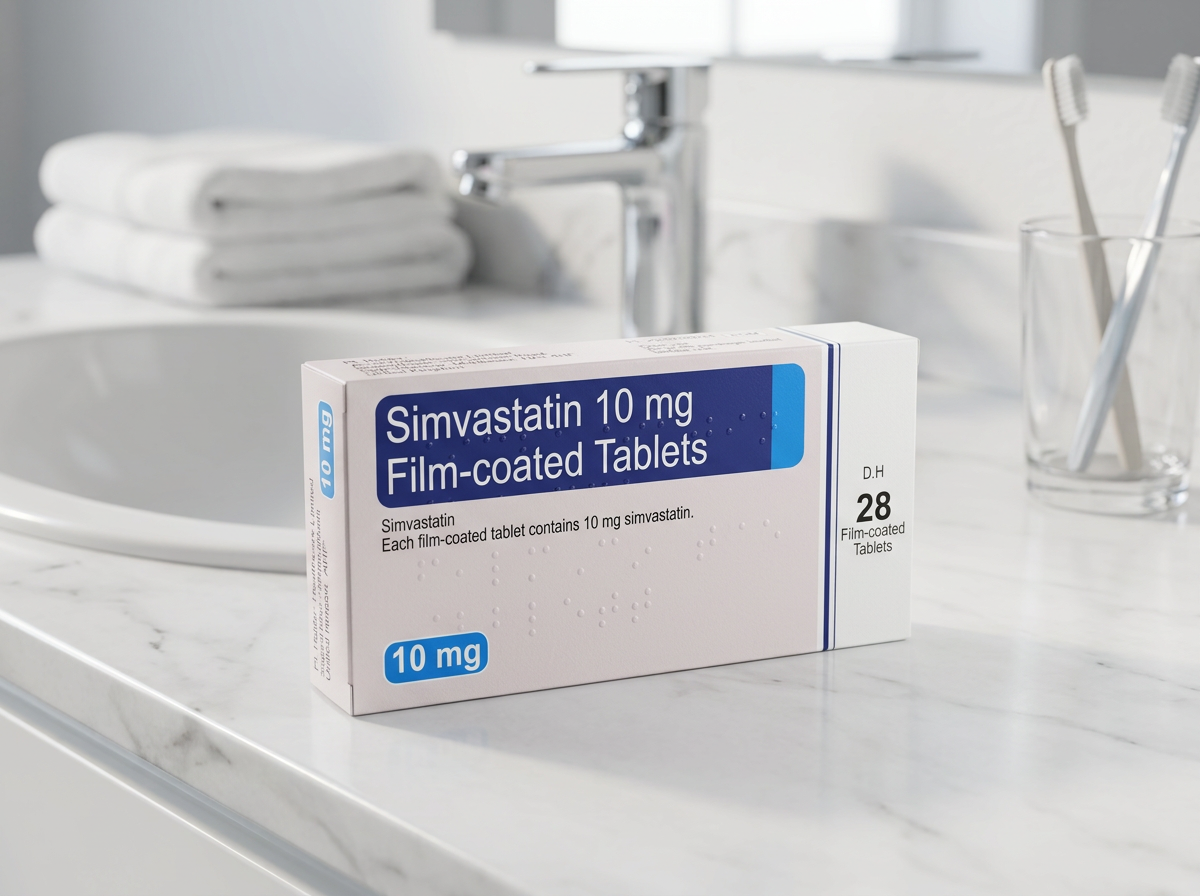
Simvastatin has been one of the most prescribed drugs in the UK for decades. It lowers cholesterol, and in people at raised cardiovascular risk it reduces the chance of heart attack and stroke.
It also has a reputation, and the reputation is mostly about muscles.
Aches in the thighs and shoulders. Heaviness climbing stairs. A vague sense of having overdone it at the gym without having been near a gym. For a proportion of people these symptoms are enough to stop treatment, often permanently.
Simvastatin is the statin where genetics has the clearest and best evidenced role in explaining who gets those symptoms. That evidence is specific, it's decades old, and it's built into international prescribing guidance.
Muscle Symptoms Are Common. Muscle Damage Is Rare.
It helps to separate the two, because they get conflated constantly.
CPIC's statin guideline sets out the scale. Muscle pain without evidence of muscle breakdown affects roughly one in ten people on statins. Actual myopathy, where there is measurable muscle damage, occurs in around one in two thousand. Rhabdomyolysis, the severe form, is rarer than one in ten thousand.
So the common experience is discomfort rather than harm. That doesn't make it trivial. Statin-associated musculoskeletal symptoms, or SAMS, are the most frequently cited reason people stop taking statins, and stopping is what actually raises cardiovascular risk.
This One Is a Transport Problem, Not a Metabolism Problem
Most pharmacogenomic stories involve enzymes that break a drug down. Simvastatin is different.
A transporter protein called OATP1B1, encoded by the gene SLCO1B1, pulls statins out of the bloodstream and into the liver, which is where they need to be to work.
A common variant in SLCO1B1, known as c.521T>C, reduces how well that transporter functions. Less of the drug gets taken into the liver, so more of it stays circulating in the body, including in muscle tissue. Higher systemic exposure is the accepted mechanism behind SAMS.
Carrying one copy of the variant gives a decreased function phenotype. Two copies gives poor function, with a larger effect.
This is one of the best established findings in the field. The link was identified in a genome-wide study of patients taking high-dose simvastatin, and it has been reproduced in later trial cohorts and in general practice data.
Why Simvastatin Specifically
All statins are transported by OATP1B1, but the consequences differ between them.
Dose is the strongest single predictor of myopathy risk across the class, and the evidence suggests dose matters more for simvastatin than for the others. That is also why the highest simvastatin dose carries UK prescribing restrictions of its own, separate from anything genetic.
Combine a dose-sensitive statin with reduced transporter function and the exposure gap widens considerably. It's the reason CPIC treats simvastatin more strictly than it treats atorvastatin or rosuvastatin at the same genotype.
The Part That Isn't Genetic
Worth being straight about this. Not all statin muscle symptoms are pharmacological.
Statins are unusual in that people often report side effects when they know they are taking one and not when they don't. CPIC acknowledges this nocebo effect directly, alongside the fact that symptom rates in routine practice run higher than in blinded trials.
Genetics explains a meaningful share of genuine, exposure-driven symptoms. It does not explain all reported symptoms, and a test result that comes back normal function doesn't mean someone is imagining their aches. Other factors matter too, including age, body size, thyroid function, exercise, kidney and liver function, and interactions with other drugs.
What the Guidelines Say
SLCO1B1 encodes the OATP1B1 transporter responsible for hepatic uptake of all statins. The c.521T>C variant (rs4149056) reduces function and increases systemic exposure.
CPIC's 2022 guideline covers SLCO1B1, ABCG2 and CYP2C9 across all statins, replacing the earlier SLCO1B1 and simvastatin-specific guidance. It found the highest levels of evidence for SLCO1B1 across all statins, ABCG2 for rosuvastatin and CYP2C9 for fluvastatin.
For SLCO1B1 decreased function or possible decreased function, CPIC recommends prescribing an alternative statin of the desired potency. If simvastatin is warranted, limit the dose to under 20mg daily. Classified as a strong recommendation.
For SLCO1B1 poor function, CPIC recommends an alternative statin, with no simvastatin dose offered. Also strong.
Simvastatin is handled more conservatively than the other statins at the same phenotype. For comparison, atorvastatin at decreased function is capped at 40mg rather than switched.
For patients already established on therapy, CPIC advises that those tolerating a moderate-risk statin and dose for at least four weeks without symptoms can reasonably continue, and those in a high-risk category who have tolerated therapy for at least a year can continue safely.
CPIC notes that a genotyping error would persist in the record for life, and that inappropriate avoidance of statins is itself a risk.
What This Doesn't Mean
The guideline is explicit on one point, and it's worth quoting the sense of it plainly: statin therapy should not be discontinued or avoided on the basis of a genotype result in someone who has an indication for it.
A decreased function result is not a reason to come off a statin. It's information about which statin, and at what dose. The cardiovascular benefit of being on an appropriate statin outweighs the muscle symptom risk in people who need one.
Any change to your treatment belongs with the clinician who prescribed it.
When Testing Is Worth Considering
You've had muscle symptoms on simvastatin or another statin
You've stopped a statin in the past and never restarted
You're about to start and would rather get the choice right first time
You need long-term, high-intensity cholesterol lowering
You take other medicines that interact with statin transport or metabolism
You have a family history of statin intolerance
Choosing the Right Statin, Not Abandoning Statins
Statin intolerance is usually treated as a fact about a person. Often it's a fact about a specific drug at a specific dose in a specific body.
The distinction matters, because people who stop statins tend not to restart, and the cardiovascular risk that follows is real and cumulative.
Mantara's Pharmacogenomic (PGx) test includes SLCO1B1, the gene behind this. It won't tell you whether you need a statin. It can tell your clinician which one you're most likely to tolerate, which is a different and more useful question than whether to keep trying.